The Intersection of Politics, Sports, and Youth Empowerment in Kenya

President William Ruto and Kakamega Governor Fernandes Barasa present Lugusi team captain a trophy after winning the 4th edition of Kakamega County governors football tournament at Bukhungu stadium on January 1, 2026. [Benjamin Sakwa, Standard]
In recent months, the worlds of sports and music have emerged as critical arenas for political leaders across Kenya, serving not only as platforms to nurture youth talent but also as strategic avenues for mobilizing support ahead of the upcoming 2027 elections. On January 1, 2026, President William Ruto graced the 4th edition of the Kakamega Governor’s Cup football tournament at Bukhungu Stadium, underscoring this trend’s significance.
A Political Touchpoint
Addressing the gathered fans, players, and local leaders, Ruto emphasized the government’s commitment to sports as a catalyst for youth empowerment and national transformation. “We are building 21 modern stadia across the country to nurture the sporting talents of our young people. Talanta Sports City Stadium will be completed later this year, delivering world-class sports infrastructure,” he proclaimed, outlining a vision for a thriving sports culture.
The President’s presence at the tournament highlights a growing trend where political figures actively engage in sporting events, viewing them as more than just entertainment; they are integral to community interaction and support-building.
Investment in Infrastructure
During the ceremony, the President, alongside Kakamega Governor Fernandes Barasa, announced a significant Sh1.4 billion investment aimed at enhancing Bukhungu Stadium into a 25,000-seater facility. This development is set to be the largest in Western Kenya, representing a strategic investment in local sports and youth engagement. Ruto’s remarks reflected a broader strategy for Kakamega County, where the government has committed Sh35 billion to accelerate developmental initiatives.
“Transformation does not require miracles. It needs a clear vision and leadership equal to that vision. Our leadership will be measured by impact, not rhetoric,” he asserted, encapsulating the intention behind these investments.
Grassroots Development
The call for increased funding and support for sports departments by political leaders echoes the sentiments expressed during other tournaments across the nation. National Assembly Speaker Moses Wetang’ula highlighted the crucial role of county governments in recognizing and nurturing raw talent. “County governments, being closest to young people with potential, are best placed to tap, structure and develop this talent through deliberate investment,” he noted, reinforcing the connection between local governance and youth empowerment.
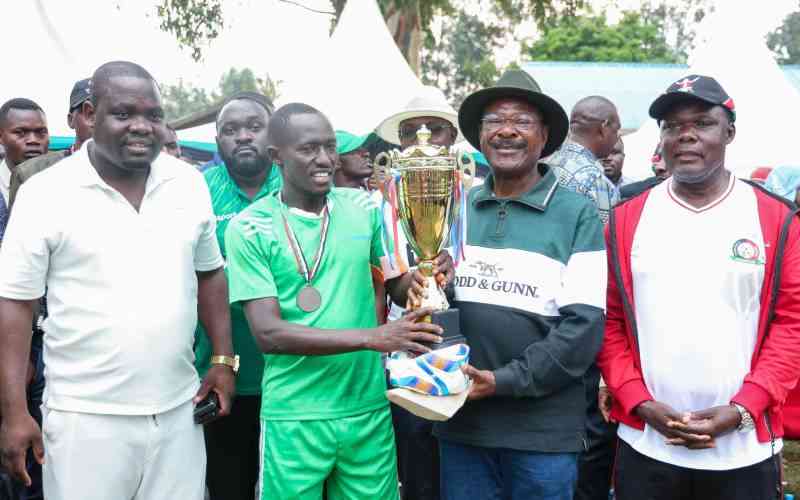
National Assembly Speaker Moses Wetang’ula at Namilama Primary School during the Dr. Juma Mukhwana tournament finals on December 31, 2025. [Mary Imenza, Standard]
In Bungoma, similar messages were relayed during a tournament sponsored by Industrialisation Principal Secretary Dr. Juma Mukhwana. Here, the Milimani FC clinched the football title after an intense penalty shoot-out, while Bwake lifted the volleyball trophy. This event was an opportunity for local leaders to emphasize the importance of complementing national talent development efforts.
Community Impact and Engagement
In Homa Bay, Governor Gladys Wanga emphasized the positive effects of such tournaments during the Opira Festival Football Tournament. “These tournaments give our youth exposure, confidence, and a sense of belonging,” she stated. Engaging in sports not only fosters local talent but also helps build community cohesion and pride.
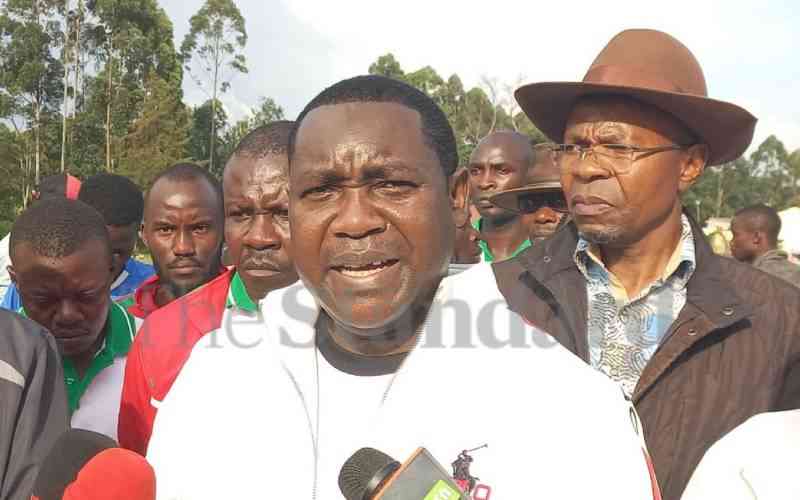
Businessman Sisco Mbindi addressing the press after hosting finals of a football tournament in Sabatia at Chavakali School on December 31, 2025. [Brian Kisanji, Standard]
In Vihiga County, the annual Sisco Mbindi Football Tournament at Chavakali High School not only facilitated sports but also included civic mobilization efforts. Leaders urged youth to register as voters, highlighting the potential for sports to crossover into political engagement and civic responsibility.
A New Political Paradigm
Political leaders have recognized that the changing landscape of political engagement calls for innovative approaches. The FKF Limuru Sub-Branch “Okoa Boy Child” Tournament finals in Kiambu, held on December 21, 2025, served as an example of how sports can become a unifying platform, addressing broader societal issues like drug abuse and equality. Organizers understood this growing role, as athletes and spectators became more intertwined in political narratives.
Senate Speaker Amason Kingi emphasized the necessity of grassroots talent identification and nurturing at the KKK Cup held in Kericho County. His remarks encapsulated a commitment to providing youth with opportunities to earn a livelihood through sports, which can elevate Kenya’s status as a sporting nation.
The Influence of Sports and Music
Political analyst Protus Momanyi noted that as traditional rallying tactics lose efficacy, sports and music festivals are becoming key platforms for political engagement. They foster goodwill and visibility, transforming community experiences not only into entertainment but also as avenues for genuine political connection.
“Sports tournaments offer politicians soft power to build goodwill and loyalty,” he explained, acknowledging the evolving dynamics of political rallies.
Through these evolving intersectional spaces of sports, music, and politics, Kenyan leaders aim to engage and uplift youth, actively shaping a narrative that intertwines development with communal solidarity and political engagement.