Unity and Political Ambitions: The Luhya Community’s Path Ahead
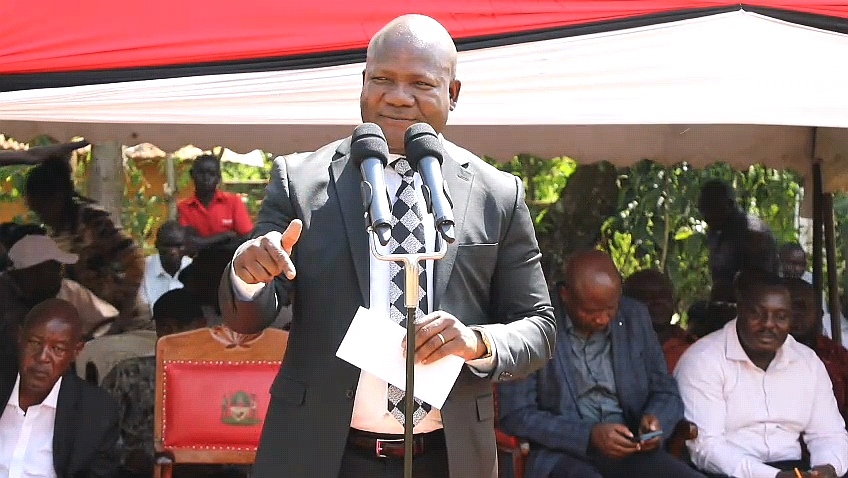
At a recent emotional gathering, Kakamega Governor Fernandes Barasa articulated a compelling vision for the Luhya community’s political future. Speaking at the burial of Philemon Aoko, the son of former Matungu MP David Were, Barasa emphasized the importance of unity among Luhya leaders in preparation for the 2027 general elections. His statements were not merely a call to action; they encapsulated a broader strategy aimed at positioning the Luhya community as a vital player in the national political landscape.
The Call for Unity
Governor Barasa strongly urged leaders from the Western region to forge a unified political and developmental agenda. He argued that a cohesive approach would not only enhance their bargaining power on the national stage but also pave the way for a credible presidential candidate in the aftermath of President William Ruto’s tenure in 2032. “When 2032 approaches, we shall have gathered strength, capacity, and political will,” he asserted. This emphasis on unity serves a dual purpose: it aims to strengthen the community’s collective influence and to harness political momentum geared towards future leadership opportunities.
A Vision for Development
In his remarks, Barasa highlighted that sustained unity among local leaders could hasten development in the region. He painted a picture of a Luhya community that, when united, could nurture formidable political figures capable of challenging for the presidency. The sentiment was echoed by Kakamega Deputy Governor Ayub Savula, who stressed the significance of a unified front in articulating a compelling vision for the country.
The governor’s remarks come at a time when many are questioning the effectiveness of the opposition parties, primarily due to their lack of cohesion. Barasa and Savula’s rhetoric highlights a growing frustration with the fragmented opposition, which has struggled to present a convincing alternative to the current ruling establishment.
Perspectives on National Politics
In addition to focusing on local unity, Barasa weighed in on the broader national political environment, positing that an alliance between the United Democratic Alliance (UDA) and the Orange Democratic Movement (ODM) could prove “unbeatable” in the upcoming elections. His endorsement of such a coalition underscores a strategic approach to align with the power structures already in place while sidestepping the risks associated with political fragmentation.
Barasa’s perspective reflects a keen awareness of the shifting dynamics in Kenyan politics. By fostering alliances, particularly with traditional adversaries like ODM, he is not just seeking a place at the power table but also inviting collaboration that could redefine political strategies. This approach may resonate with constituents who are weary of political uncertainty and divisiveness.
Critique of the Opposing Forces
In sharp contrast, Barasa and Savula critiqued the opposition’s inability to unify and present a coherent agenda. Savula pointedly noted, “The opposition is disjointed and lacks a convincing agenda to rally Kenyans.” This statement underscores a wider sentiment that the opposition has become consumed by internal conflicts, opting to criticize the government without offering viable alternatives or a shadow cabinet to enact those alternatives.
The discourse around the inadequacies of the opposition reflects a wider narrative in Kenyan politics where the electorate increasingly seeks leaders who can provide tangible solutions rather than merely critiquing the status quo. This opens the door for the Luhya leadership to capitalize on the current landscape, potentially establishing themselves as merchants of unity in a time of political fragmentation.
Analyzing the Future of the Luhya Community
Governor Barasa’s statements serve as a revealing glimpse into the ambitions driving Luhya leaders as they seek relevancy in the national discourse. By framing unity not just as a tactical move for the 2027 elections but as a long-term strategy for a presidential bid in 2032, Barasa and his colleagues are skillfully positioning themselves ahead of the political curve.
As regional leaders, their focus on alignment and development suggests a calculated approach to both governance and power acquisition. The shift toward coalition-building exemplifies their understanding that unity could be their strongest asset in reclaiming political power, particularly in an unpredictable electoral landscape.
The emerging conversation around Kakamega’s political ambitions encapsulates more than just a local narrative; it represents an intricate interplay of alliances and strategies that will determine the future of not only the Luhya community but the wider political fabric of Kenya as well.