
Political Assurance: Oparanya Addresses Rift Speculations with Governor Barasa
In the bustling corridors of Kenyan politics, unity often seems fleeting. Recently, concerns regarding a potential political rift between Cooperatives and SMEs Cabinet Secretary Wycliffe Oparanya and Kakamega Governor Fernandes Barasa stirred discussions. However, Oparanya has stepped forward to lay these rumors to rest, emphasizing that he has no intention to engage in rivalry at the county level.
Oparanya’s Stance on Local Politics
In a candid interview on September 22, Oparanya, who previously served as the governor of Kakamega, explicitly stated his commitment to his current national duties. “What is there for me to be involved with in Kakamega? I have enough work as a Cabinet Secretary. I have nothing to do in Kakamega,” he remarked, reinforcing his focus on broader responsibilities rather than local political affairs.
Clarity Amidst Speculation
Oparanya’s statements come at a crucial time when political alliances and rivalries are under constant scrutiny. He firmly rejected any notion of hostility, asserting, “There is no fallout. I have no business with him; we are not rivals.” His comments suggest that Oparanya prioritizes the development initiatives undertaken by Barasa, stating he supports the progress aimed at benefiting the people of Kakamega.
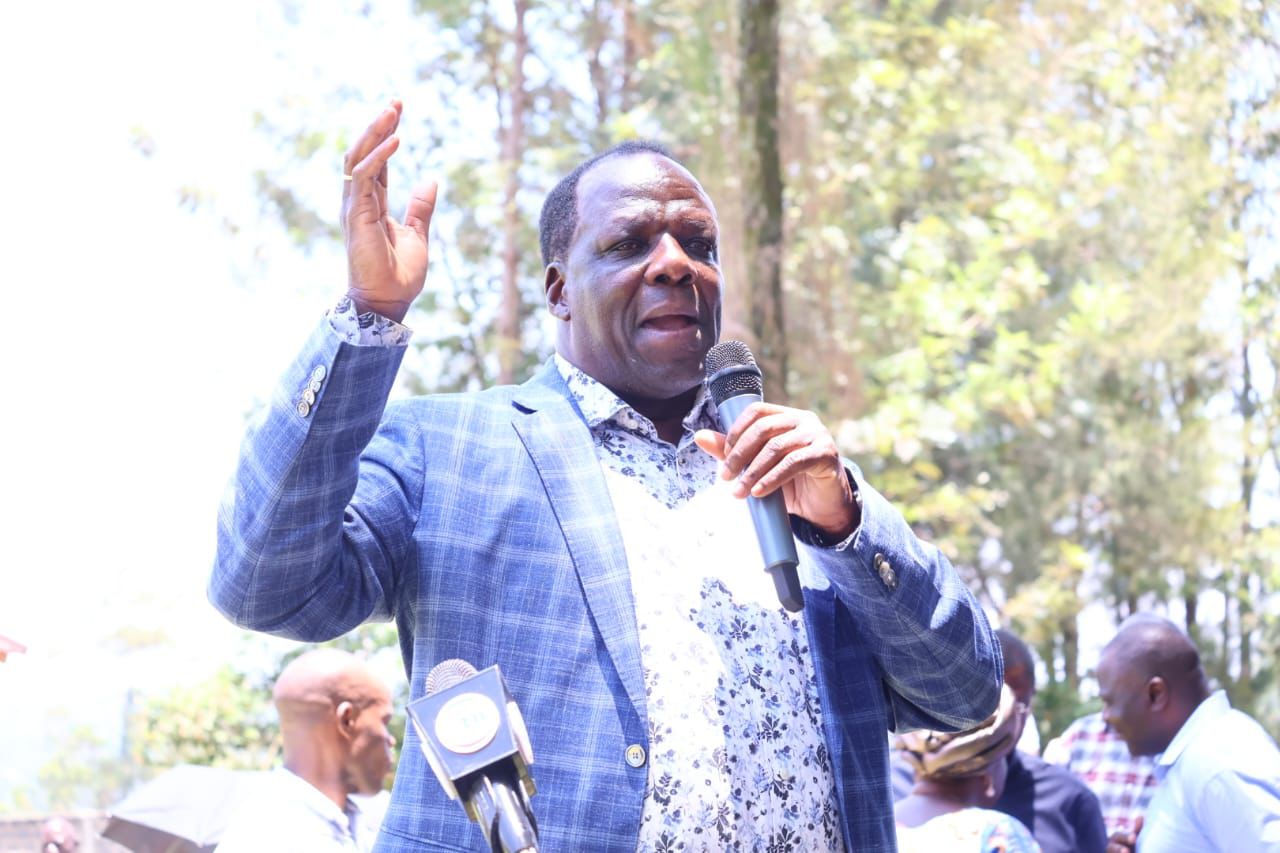
File image of Wycliffe Oparanya
Legal Challenges Intensify
While Oparanya seeks to quell political tensions, his recent legal battles have introduced another layer of complexity to his public life. Just a week prior to his interview, the High Court in Nairobi nullified a decision by the Office of the Director of Public Prosecutions (ODPP) to withdraw corruption charges against him. This ruling prompted questions regarding the integrity of the legal process and the actions of the ODPP.
The Court’s Ruling
On September 16, Justice Benjamin Musyoki issued a judgment deeming the ODPP’s decision to drop the charges against Oparanya as irregular and unconstitutional. The ruling was in response to a constitutional petition filed by activist Fredrick Mulaa, who challenged the ODPP’s earlier decision to close the case against Oparanya.
Musyoki stated, “A declaration is hereby issued that the 1st respondent’s decision to review its decision to charge the 1st interested party with the offences of conflict of interest, abuse of office, money laundering, and conspiracy to commit an offence of corruption contained in its letter dated 8th of July 2024 is irregular and unconstitutional.”
Implications of the Judgment
The judgment sheds light on significant concerns about the ODPP’s actions. Musyoki noted that the ODPP acted outside its legal bounds by reviewing and subsequently dropping the case without engaging with the Ethics and Anti-Corruption Commission (EACC), which had recommended prosecution.
“The inevitable conclusion is that the 1st respondent usurped the powers of the 2nd interested party,” the judge remarked, underscoring the imperative for compliance with established legal protocols. This incident raises pertinent questions about accountability and the politicization of the judicial process.
Political Landscape Overview
In the larger context of Kenyan politics, Oparanya’s situation exemplifies the intricate dance between governance, legal accountability, and public perception. As political figures navigate through personal and professional challenges, the lines between local and national responsibilities blur, making clear communication essential.
Oparanya’s recent statements demonstrate a commitment not merely to his duties but also to fostering a cooperative political environment in Kakamega, reinforcing the idea that development and progress should transcend individual political ambitions. His legal misfortunes, meanwhile, serve as a reminder of the vulnerability of public figures in a highly politicized judicial landscape.
In summary, Wycliffe Oparanya’s approach to clarifying his relationship with Governor Fernandes Barasa is a case study in political communication and the importance of focusing on developmental goals while grappling with the challenges of legal scrutiny. The intertwining of political roles and legal accountability remains a vital aspect of governance in Kenya, highlighting the need for transparency and collaboration amid the complexities of public service.