Sports and Politics: A Winning Combination in Kenya
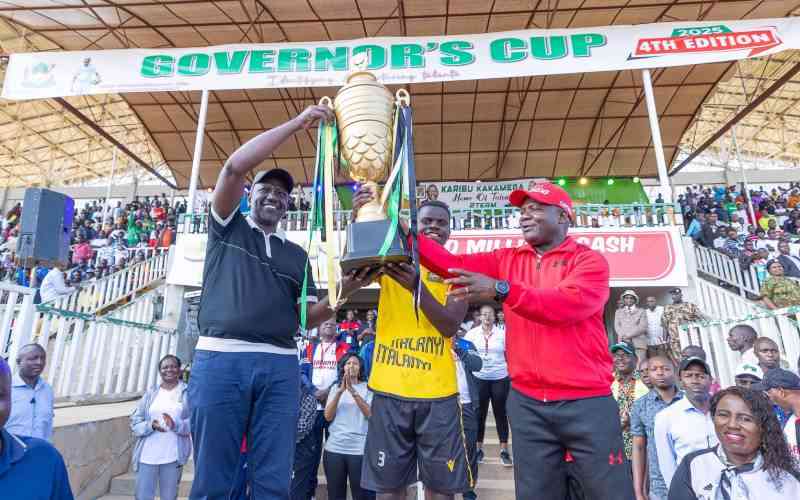
President William Ruto and Kakamega Governor Fernandes Barasa present Lugusi team captain a trophy after winning the 4th edition of the Kakamega County governors football tournament at Bukhungu stadium on January 1, 2026. [Benjamin Sakwa, Standard]
Over the past two months, the realms of sports and music have taken center stage for many political leaders in Kenya. Tournaments have evolved not only into platforms for nurturing youth talent but also as strategic venues for mobilizing young voters and consolidating political support ahead of the looming 2027 elections.
On January 1, 2026, President William Ruto was a prominent figure at the 4th edition of the Kakamega Governor’s Cup football tournament held at Bukhungu Stadium. Addressing a bustling crowd of fans, players, and local leaders, he emphasized his administration’s commitment to sports as a pivotal driver of youth empowerment and national transformation.
Ruto proclaimed, “We are building 21 modern stadia across the country to nurture the sporting talents of our young people.” One highlight of his vision included the anticipated completion of the Talanta Sports City Stadium later this year, designed to offer world-class sports infrastructure.
The President wasn’t just making promises; he announced a Sh1.4 billion investment aimed at transforming Bukhungu Stadium into the largest facility in Western Kenya, with a capacity of 25,000 seats. This investment, he noted, is a fraction of a broader Sh35 billion commitment to accelerate development in Kakamega County. “Transformation does not require miracles. It needs a clear vision and leadership equal to that vision,” Ruto asserted, reinforcing the notion that impactful governance stems from concrete actions rather than mere rhetoric.
The Social Unification Through Sports
The spotlight on sports as a political tool extends beyond Ruto’s initiatives. Legislative leaders have been vocal about the importance of supporting youth through sports as a sustainable pillar for creative economic growth. National Assembly Speaker Moses Wetang’ula, for example, urged county governments to elevate their funding for sports departments, arguing that local authorities are best positioned to identify and nurture raw talent. He described sports as pivotal for developing sustainable community economies.
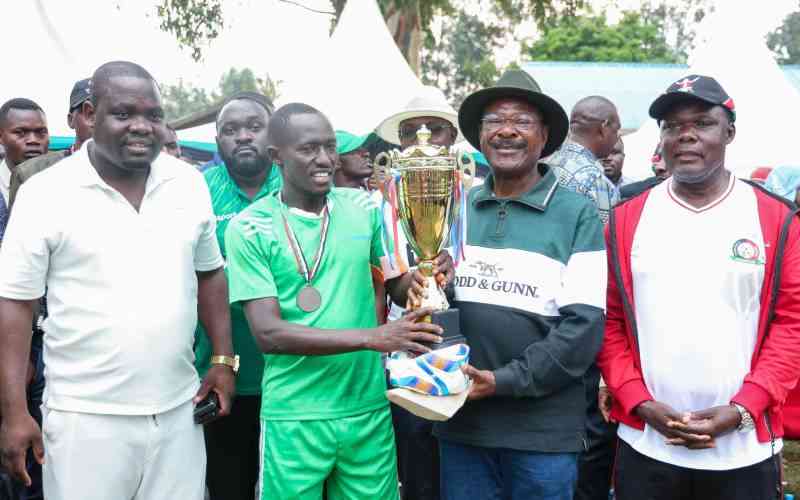
National Assembly Speaker Moses Wetang’ula at Namilama Primary School during the Dr. Juma Mukhwana tournament finals on December 31, 2025. [Mary Imenza, Standard]
This sentiment resonated during the finals of a tournament sponsored by the Industrialisation Principal Secretary Dr. Juma Mukhwana at Namilama Primary School in Bungoma. After a nail-biting match where Milimani FC emerged victorious, speakers urged local governments to bolster national initiatives in talent development while encouraging youth to explore digital job opportunities.
In various regions, leaders are aligning sports with civic responsibilities. For instance, Governor Gladys Wanga and Homa Bay Town MP Peter Kaluma attended the Opira Festival Football Tournament to promote local talent and assert the importance of youth participation in community activities. Wanga highlighted that such tournaments instill confidence and belonging among young people, further enhancing community ties.
Holistic Approaches to Youth Engagement
In Vihiga County, the Sisco Mbindi Football Tournament seamlessly combined sports with civic engagement, with leaders encouraging youth to register as voters following low turnout in previous elections. “The future of Sabatia constituency lies in investing in young people,” asserted businessman Sisco Mbindi, emphasizing that football serves as a tool for recreation, entertainment, and talent development.
Similarly, the FKF Limuru Sub-Branch hosted the “Okoa Boy Child” Tournament finals, highlighting issues such as drug abuse and gender equality while creating a platform for direct interaction between leaders and their constituents. Senate Speaker Amason Kingi echoed these sentiments, underscoring that nurturing sports talent at the grassroots level is essential for job creation and national pride.
Politicians Embrace Soft Power Through Community Sports
Analyst Protus Momanyi notes that with traditional political rallies losing traction, sports events have emerged as essential arenas for politicians to exercise soft power. “Sports tournaments offer politicians an opportunity to build goodwill, visibility, and loyalty through shared community experiences,” he remarked, stressing the shifting dynamics of political engagement in the lead-up to the 2027 elections.
As Kenya navigates its political landscape, the intertwining of sports, youth empowerment, and civic responsibility is expected to continue fostering community engagement, shaping not just the future of sports, but also the next wave of political leaders.