
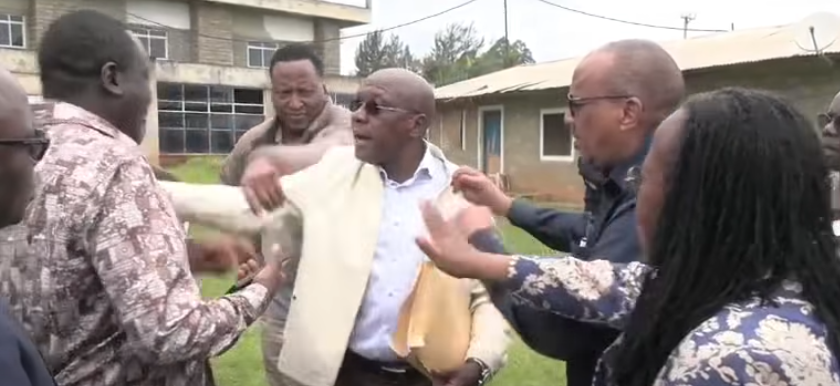
Kakamega Senator Bonny Khalwale in a heated confrontation with a county official. /FB SCREENGRAB
Recently, a dramatic incident unfolded during a Senate oversight visit to Kakamega County, drawing attention not only to the conduct of the officials involved but also to the broader implications for governance and accountability within Kenyan politics. The confrontation that took place between Kakamega Senator Boni Khalwale and County Executive Committee Member for Finance, Benjamin Andama, has become a hot topic, igniting debates about professionalism in governance.
Governor Fernandes Barasa found himself compelled to formally petition Senate Speaker Amason Kingi to initiate disciplinary action against Khalwale. In his statement, shared publicly, Barasa expressed his deep disappointment with Khalwale’s behavior, describing it as “regrettable and abhorrent.” This reaction signals not only a strong personal response but also a broader concern for the standards of conduct expected from public officials.
Barasa articulated that the County Government of Kakamega had welcomed the Senate Devolution Committee in the spirit of collaboration and constructive criticism. He placed significant emphasis on the expectation that such interactions should be marked by professionalism and respect. “When this objectivity is lost, the true spirit of oversight is undermined,” he stated, shedding light on the potential repercussions of such behavior on public trust in governance.
The tension escalated significantly during the committee’s inspection tour of the Kakamega County Level 6 Teaching and Referral Hospital. What started as a routine oversight visit quickly devolved into a heated argument. Videos circulated on social media showcased Khalwale pointing and declaring, “In my lifetime, we will get you people arrested,” a statement that raised eyebrows and drew concern among fellow senators present.
Khalwale’s approach was notably aggressive, as he dismissed Andama’s attempts to defuse the situation with a firm declaration: “I am very serious, and I am very objective.” This verbal exchange was alarming enough to prompt intervention from multiple senators. Committee chair Mohamed Abass and colleagues, including Richard Onyonka and Catherine Mumma, were seen stepping in to restore calm, indicating the gravity of the confrontation.
Amid the chaos, Barasa took the opportunity to defend Andama’s professional record, asserting that he had served diligently and dedicatedly in his role. The governor argued that Khalwale’s allegations were not only derogatory but also undermined the dignity of public officers, fundamentally challenging the essence of intergovernmental cooperation.
Barasa pointedly questioned Khalwale’s presence at the oversight mission, given that he is not a member of the Senate Devolution Committee. This raised further questions about the protocols and expectations of conduct during such visits. The governor’s call for an investigation into the incident highlighted a growing need for accountability, both within the Senate and the broader administrative framework.
In his plea to Speaker Kingi, Barasa urged a swift investigation and decisive action to uphold the integrity of the Senate’s oversight responsibilities. His insistence on respect and cooperation contrasts sharply with the confrontational atmosphere created by Khalwale’s outburst, presenting a vivid picture of the current challenges in political engagement.
As the incident gained traction, it sparked a broader dialogue regarding the limits of parliamentary privilege and the expectations placed on leaders during oversight missions. While Khalwale has yet to issue a formal apology, he took to social media to emphasize the necessity of demanding accountability from public officials—a statement that certainly resonates in the current climate of political scrutiny.
Public reaction has been polarized; some commend Khalwale for his assertiveness, arguing that it reflects a passionate commitment to accountability, while others criticize his aggressive demeanor as detrimental to respectful governance. This division underscores a critical conversation about the nature of political dialogue in Kenya and the standards by which leaders are measured.